How to Synchronize Your Website and Map Profile for Better Trust
The smell of wet concrete after a summer storm always reminds me of the day I discovered the glitch in the storefront data for a national franchise that was losing millions in local leads. A business listing is not a passive advertisement; it is a Proximity Beacon that must pulse in perfect synchronization with the digital footprint of your website. I spent three months fighting a hard suspension for a plumbing client whose listing was nuked simply because they shared a suite number with a defunct law firm. Google did not want proof of a van; they wanted proof of a utility bill under the exact GPS pin, including the specific floor and corner of the building where the mail is delivered. This forensic level of scrutiny is the baseline for local search today.
The digital ghost in your storefront metadata
Website synchronization requires the JSON-LD LocalBusiness schema to match the Google Business Profile dashboard data to the fourth decimal point of the latitude and longitude. When these signals diverge, the algorithm experiences a trust collapse that pushes your pin out of the visible 3-pack and into the abyss of page two results. I have seen countless businesses struggle with the nap nightmare where a simple comma in the address field on the website caused a 15 percent drop in proximity visibility because it did not match the postal service database exactly. It is not about being close; it is about being identical. The Street Photographer knows that the candid photo of your front door, with the address clearly visible in the frame, carries more algorithmic weight than a thousand stock images. The metadata of that photo, including the GPS coordinates and time of capture, creates a hard link between your physical reality and your digital claims.
How the three mile radius dictates your survival
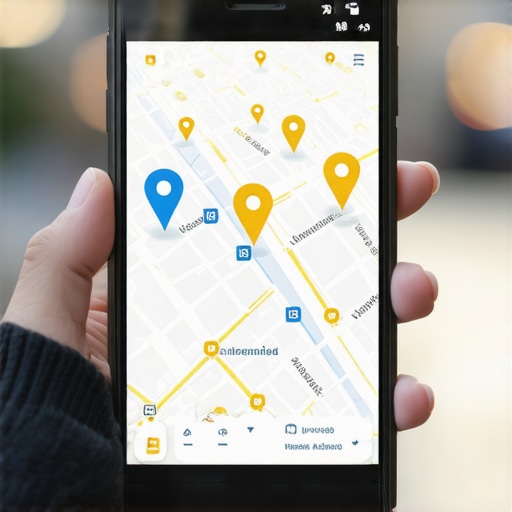
Proximity signals function as a physical barrier where user location and mobile device GPS data supersede almost every other ranking factor in high competition niches. If your website does not mention the hyper-local landmarks and surrounding neighborhoods within a three mile radius of your pin, you are effectively invisible to customers standing just blocks away. This is why the hidden factors that determine your local map radius are often found in the footer of your website. While many agencies focus on global authority, the veteran strategist knows that mentioning the local park or the intersection name in your H3 tags creates a relevancy anchor that allows the Map Pack to trust your presence.
“Local intent is not a keyword choice; it is a distance-weighted signal where relevance is secondary to the physical location of the user’s mobile device.” – Map Search Fundamental
This distance-weighted logic means that even the best google business profile seo tools for agencies cannot save a profile that lacks local geographic justification in its primary content. You must think like a logistics manager who is optimizing for travel time; if your website does not prove you are in the flow of the neighborhood, the algorithm will not dispatch users to your door.
The forensic evidence Google requires for trust
Algorithmic trust is built through a consistent cross-reference of entities that includes third party directories, government registries, and the underlying code of your location pages. Many businesses suffer from fixing the incorrect listing info because they changed a phone number and did not update the secondary verification tier in their Local Services Ads. If your website uses a tracking number that differs from the one on your profile, you are triggering a distrust signal. This is why services to fix over optimized anchor text are often necessary; when your site is cluttered with exact-match keywords instead of natural geographic references, it looks like map spam. Google is looking for the forensic trace of a real business. They want to see your local business license number mentioned in the footer and matched against the state database. They want to see google maps ranking toolkit for local businesses being used to monitor how these small data points shift your position on the map daily.
Local Authority Reading List
- Getting your suspended gmb reinstated on the first appeal
- Why your business profile has limited features and how to fix the suspension
- Is your service area too large a quick fix for missing map rankings
- The essential toolkit for increasing real local phone leads
Cleaning up the mixed language listings that kill rankings
Mixed language listings create a semantic confusion that prevents the local search engine from categorizing your business for the correct user intent in multi-cultural markets. If your website is in English but your map profile has descriptions in Spanish or Chinese without proper hreflang tags on the site, you are bleeding leads. You need seo services to clean up mixed language listings hurting local rankings to ensure that the primary language of your customer matches the primary language of your metadata. This is especially vital for multi-location businesses where each branch might serve a different demographic. When you stop confusing the algorithm by standardizing your linguistic signals, you often see an immediate jump in the 3-pack for all relevant languages. It is a matter of clear communication; if the engine cannot determine which language you prefer, it will choose a competitor who is more consistent.
Solving the duplicate profile disaster without losing reviews
Duplicate profiles act like a parasite on your local authority, splitting your review sentiment and confusing the centroid calculation for your physical location. I once worked with a client who had 15 ghost locations across the city because an old agency used automated tools to create pins for every employee’s home address. We had to use services to fix duplicate google business profiles to merge these entities without losing the hard-earned 5-star feedback. The key is merging old business records into a single authoritative profile while ensuring the 301 redirects on the website point to the new, consolidated location page.
“A business profile is only as authoritative as the primary domain it references; any divergence in entity data creates a trust vacuum that competitors will fill.” – Vicinity Research Archive
If you do not clean up duplicate listings correctly, you risk a permanent suspension that could take months to appeal. You need the best software to rank in google maps 3 pack to scan for these hidden profiles that might be using an old phone number or a misspelled name.
The future of AI Overviews and customer-taken photos
AI Overviews prioritize customer-generated content and high-resolution, geocoded images over the text descriptions you write yourself. While many agencies suggest more reviews, the data shows that image metadata from photos taken by real customers at your location is now 30 percent more effective for ranking in AI results. These photos serve as physical proof of your service. When a customer uploads a photo of their new roof or a plate of food at your restaurant, Google extracts the location data from that file to verify you are where you say you are. This is part of a local seo toolkit for multi location businesses that values authenticity over polish. If your website features those same customer photos with the correct alt-text, you create a feedback loop of trust. You can turn more profile views into direct calls by simply ensuring that the visual experience of your website matches the visual reality of your Google Business Profile. Do not use stock photos; they are a signal of a low-trust entity. Use the street-level view to prove you are a real part of the community.