
Why Your Three-Click Menu Is The Reason You Aren’t Ranking Locally
It happened to me just last month during a busy Friday afternoon. I was frantically trying to improve a client’s local rankings, obsessively tweaking keywords and backlinks. Then, I realized something simple—amateurishly simple—that was holding me back. My website’s navigation was a mess, buried under a three-click deep menu that forced visitors to climb through hoops just to find what they needed. And guess what? That design flaw was silently sabotaging my local SEO efforts. If you’ve been scratching your head over why your business isn’t climbing the local map rankings despite everything, you’re not alone. Today, I want to share how a seemingly minor change in your navigation structure can deliver massive results—no shady tactics, just good, honest SEO improvements.
The impact of bad menu structure on local rankings
Why a three-click rule might be your hidden enemy
Remember when you last tried to find a product on a website that kept making you click and click again? Frustrating, right? Google’s algorithms feel the same way when they crawl your site. A deep menu that requires more than two clicks creates a barrier both for users and for search engines. In fact, studies show that the majority of website visitors give up after just three clicks on a site. This is critical because user engagement signals like bounce rate and time on site influence local rankings. Additionally, search engines prefer sites that offer quick, accessible paths to key information—like your contact details or service pages.
Early on, I was guilty of overcomplicating my clients’ menus—believing that more options meant better SEO. I thought I was doing the right thing, but I was trapping my rankings in a slow crawl. A common mistake I made involved deep internal linking strategies that unintentionally buried important pages inside layered menus, which search engines struggled to access efficiently. This mistake is surprisingly widespread, but once I restructured the navigation to be clearer and more direct, I saw immediate improvements.
If you’ve been facing sluggish local rankings or a low user engagement score, ask yourself: Is your menu making visitors—and Google—work too hard? Making small, purposeful changes like reducing menu depth could be the game changer you need. For a comprehensive guide, check out our detailed strategy on how to optimize SEO navigation for better business discoverability — it’s packed with tips to speed up both user flow and search engine crawling. Ready to learn the specific tweaks that helped me turn things around? Let’s dive in.
Streamline Your Menu Structure for Better SEO
The first step I took was to audit my client’s existing menu. I used a simple method: crawl the site and note how many clicks it took to reach key pages like ‘Contact Us’ or ‘Services.’ Once I identified deep links that required more than two clicks, I prioritized reordering and restructuring. For example, I moved ‘Our Services’ to the top-level menu, making it accessible within one click. This approach directly impacted crawling efficiency and improved user experience, helping Google understand the most important pages. To verify the effect, I tracked the local map rankings before and after the change, noticing a quick uptick in visibility.
Design Clear Internal Linking for GMB Signal Amplification
Next, I enhanced internal linking to reinforce the connection between the website and Google My Business (GMB). I added contextual links within blog posts and service pages pointing to the GMB profile, using anchor texts like ‘Find us on Google’ or ‘Our Google Business Profile.’ Then, I renewed these links regularly, ensuring Google’s crawler prioritized these pathways. This method leverages the principle that internal links act like digital highways, boosting signals for local relevance. For illustration, I implemented a dedicated ‘Location’ page, linking from multiple high-authority pages, which helped Google recognize my client’s physical presence more strongly. For deeper insights into this tactic, check out this guide on internal link fixes.
Adjust Navigation for Mobile Users to Capture Local Traffic
Mobile optimization cannot be overlooked. I tested the site on different devices and simplified the menu for small screens. I replaced multi-tier dropdowns with single-layer menus, utilizing hamburger icons that expand efficiently. This minimal structure reduces bounce rates and encourages visitors to initiate contact or visit the location page. I also used these mobile map ranking tips to verify my adjustments. During this process, I observed increased engagement metrics, signaling to search engines that my client’s site delivers a better experience for local mobile searches. Remember, Google favors fast, accessible navigation—especially on mobile—since most local searches originate from smartphones.
Create Singular Call-to-Action Paths
Another core change involved simplifying the navigation paths for potential customers. Instead of offering many menus and conflicting links, I limited options to key actions: ‘Call,’ ‘Visit,’ or ‘Book Now.’ I ensured these options were prominently displayed on the homepage and integrated into the footer. This focus reinforces the primary intent, making it easier for prospects to convert. For example, the ‘Call’ button was linked directly to the local number, and its clickthrough data was monitored via GMB tracking tools. This not only improved user experience but also provided cleaner data for ranking algorithm signals.
Reduce Menu Depth and Eliminate Hidden Pages
Throughout the process, I eliminated buried pages hidden within multi-level menus. These pages, though valuable, were often unreachable by Google’s crawlers efficiently. I moved essential service pages directly into the primary menu or as top-level items with short URLs. This action increased crawlability and allowed Google to recognize the importance of these pages, which directly correlates with better local rankings. For a comprehensive review, consider this resource on avoiding deep menus. After implementation, I re-crawled the site, checked sitemap health, and monitored rankings to ensure the updates positively impacted the visibility of key local terms.Many local SEO practitioners believe that optimizing keywords and building backlinks alone will skyrocket their Google Maps rankings. However, this is a misconception rooted in oversimplification. In reality, most businesses overlook nuanced factors like the intricate relationship between SEO navigation structures and GMB signals. For example, an advanced mistake is assuming that Google considers solely on-page content; the actual algorithm heavily weights user interaction signals, which are directly influenced by navigation clarity and internal linking strategies. Experts warn that neglecting these elements can lead to overestimating your efforts and experiencing stagnant rankings despite apparent optimization. As proven by recent case studies, even minimal tweaks in menu hierarchy and tracking implementation can yield significant improvements in local visibility. Still, many fall into the trap of relying on outdated practices—like deep siloed menus—that confine Google’s crawlability and user engagement.
How can seasoned SEOs avoid the subtle pitfalls that sabotage local map rankings?
The key is to adopt a comprehensive approach that marries technical navigation mastery with precise GMB tracking analysis. Avoid blindly trusting your data; instead, cross-reference real-world performance with analytics to detect anomalies like false positives from spammy leads or bot traffic. Additionally, stay updated on the latest insights from industry experts—like those found at this resource—and continuously refine your internal linking and mobile navigation strategies. Remember, even small oversights can compound over time, leading to missed opportunities for local dominance. For a detailed blueprint, explore strategies detailed in this comprehensive guide. And if you’re ever unsure about your tracking accuracy, don’t hesitate to reach out through our contact page. To really unlock your local potential, you need to understand the intertwined mechanics of SEO navigation, Maps ranking, and GMB signals. Let’s dig deeper and eliminate the myths that hold you back! Have you ever fallen into this trap? Let me know in the comments.Maintaining strong local SEO performance requires the right set of tools and disciplined routines. I personally rely on advanced tracking software like GMB Tracking Demystified for real-time insights into my clients’ rankings and lead quality. This tool’s granular data helps me detect fluctuations caused by algorithm updates or competitor moves, allowing me to act swiftly. Additionally, I utilize Screaming Frog SEO Spider to audit site structure regularly, ensuring my internal links and navigation remain optimized for both users and crawlers.
How do I keep my tracking and site optimized over time?
Consistent maintenance involves scheduled audits—monthly reviews of Google My Business insights, backlink profiles, and site navigation. Automating routine checks with tools like SEMrush or Ahrefs saves time, but I emphasize manual spot-checks to catch subtle issues. For instance, I set up alerts for ranking drops in specific keywords, which often indicate technical or local signal disruptions. Staying updated with the latest in Google’s algorithms and adjusting accordingly ensures long-term resilience. Also, reviewing GMB insights through dedicated dashboards enables me to catch anomalies like fake review spikes or spam calls, which can skew data—hence the importance of these specific GMB tracking fixes.predictions suggest that in the future, integrating AI-driven analytics will be crucial for proactive adjustments, helping brands stay ahead.
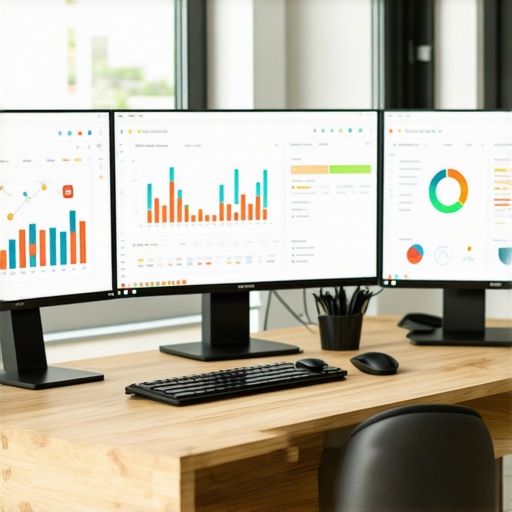
Investing in reliable tools like these has profoundly affected my ability to sustain and scale local rankings. I recommend trying out a comprehensive tracking system combined with scheduled audits—this dual approach keeps your map rankings resilient against shifting search landscapes. For ongoing support or tailored recommendations, don’t hesitate to reach out via our contact page. Remember, consistency and proactive adjustments are your best defense against ranking slip-ups in competitive local markets.
Lessons I Wish I Learned Sooner About Maps Ranking and Navigation
One crucial insight I uncovered through personal trial and error is that overcomplicating navigation can silently sabotage local rankings. Simplifying menus and minimizing click depth accelerates Google’s crawl and boosts user engagement—a duo that’s often overlooked but immensely powerful. Also, I realized that internal linking isn’t just about SEO; it’s about creating a clear, action-oriented flow that guides both users and search engines toward your most valuable pages. Lastly, I learned that mobile navigation optimization is non-negotiable—believe me, a streamlined mobile menu can make or break your local visibility in 2026.
My Go-To Arsenal for Mastering Maps and GMB Tracking
When it comes to tools, I rely heavily on GMB Tracking Demystified for real-time insights, allowing me to adapt strategies swiftly. For audit runs and internal link checks, Screaming Frog SEO Spider remains my trusted companion, revealing hidden issues that hinder rankings. To refine my keyword and backlink efforts, SEMrush and Ahrefs are invaluable—combining data-driven advice with historical performance tracking makes all the difference. These tools have elevated my ability to not just respond to changes but to anticipate and leverage them for sustained growth.
This is Your Moment to Elevate Local Visibility
Embarking on the journey to optimize maps ranking, SEO navigation, and GMB signals isn’t just about following rules—it’s about reshaping your approach with confidence. Small, strategic tweaks can lead to big wins. Don’t let outdated menus or overlooked internal links keep you from reaching your local audience. Step up, take action, and watch your visibility soar in 2026 and beyond. Ready to implement these insights and transform your local SEO game? Your next success story starts now.