Fixing the Indexing Problems That Keep Your Location Pages Invisible
I smell the metallic tang of diesel and the grit of wet concrete every time I step into a client office to diagnose a failing local strategy. To me, a business listing is a Proximity Beacon in a spatial database, not just a profile. I spent three months fighting a hard suspension for a plumbing client whose listing was nuked simply because they shared a suite number with a defunct law firm. Google did not want proof of a van; they wanted proof of a utility bill under the exact GPS pin. This microscopic level of verification is the barrier between a business that exists and one that is a ghost in the machine. When your location pages remain invisible, it is rarely a content issue and almost always a signal failure at the foundational layer of the local algorithm. We are dealing with coordinate salience where a ten foot shift in the perceived location of your storefront can disqualify you from a high intent search cluster.
The invisible ceiling on your local footprint
Indexing problems for location pages usually stem from duplicate listing conflicts, NAP inconsistencies across the citation graph, and thin content that lacks hyperlocal entity signals. Google requires unique value propositions for every service area to justify its inclusion in the Map Pack. Most agencies fail to understand that a location page is a dispatch hub for the crawler. If the crawler detects that your address is a virtual office or a shared space with high noise, it will simply drop the page from the index to maintain the integrity of the proximity filter. You must treat every pixel as a trust signal. If you find your profile vanished from search recently, it is because the relationship between your web page and your map pin has been severed by a trust audit.
“Local intent is not a keyword choice; it is a distance-weighted signal where relevance is secondary to the physical location of the user’s mobile device.” – Map Search Fundamental
The math of GPS coordinate salience involves more than just a street name. It involves the forensic trace of your service area polygon. If you are a service area business (SAB) and you have not properly defined your boundaries in the dashboard, the algorithm defaults to a microscopic radius around your verified point. This is why you see a sudden ranking drop when competitors with physical storefronts enter the radius. They have a higher physical trust score. To combat this, you need to use the specific schema fix that anchors your website data directly to the coordinates stored in the Google Maps database. Without this connection, your site is just words in a void. We often see situations where visibility just stopped growing because the owner forgot to update the metadata on their location images. These images contain EXIF data which acts as a secondary verification of your presence at that specific latitude and longitude.
Why your physical address is a liability
Physical addresses become liabilities when they are associated with keyword stuffed business names, residential zoning flags, or unverified secondary suites. Google monitors the commercial density of an address to prevent lead gen spam from polluting the local 3-pack. If your address is flagged as a co-working space, your location pages will likely face permanent indexing delays. This is the spatial reality of the modern web. I have seen businesses try to buy map views to fake popularity, only to find their entire brand nuked because the IP addresses of the views did not match the local user patterns of the city. You cannot trick a system designed to detect behavioral anomalies in real time movement data. Instead, you should focus on fixing brand confusion caused by previous marketing efforts. Often, the reason for invisibility is a ghost listing from five years ago that is still siphoning off your authority.
Local Authority Reading List
- Preparing for the 2026 local algorithm updates
- Fixing city landing pages that fail to convert
- The essential toolkit for local map rankings
- Cleaning up duplicates without losing review data
The three mile radius that determines your revenue
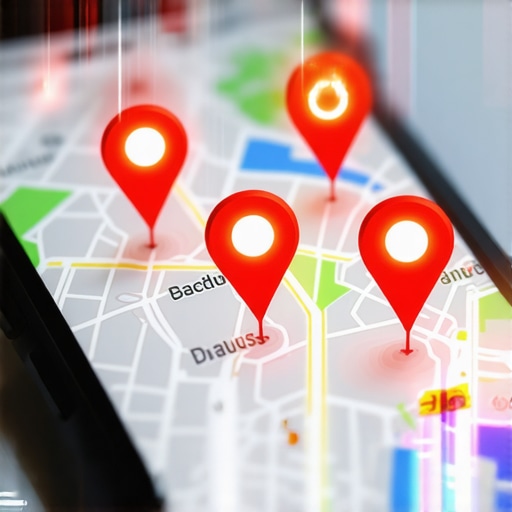
The three mile radius is the primary engagement zone where proximity signals are strongest and click through rates from mobile maps peak. This hyperlocal boundary is defined by user density and competitor proximity rather than simple geometry. Winning this zone requires localized content clusters and high intent category selection. When a user searches for a service, Google calculates the distance from their current mobile location to your verified pin. If your location page does not mention specific landmarks within that three mile radius, you are failing the relevance test. You need to use hyperlocal neighborhood content to prove to the engine that you are a part of that community. National brands struggle here because they use generic templates. A local owner can win by mentioning the specific street corners, local parks, and neighboring businesses that a corporate copywriter would never know. This is how you fix near me rankings without resorting to desperate tactics.
“The proximity of the searcher to the business remains the primary ranking factor in the local ecosystem, regardless of organic strength.” – Vicinity Research Analysis
We must also discuss the technical debt of old locations. I have worked with companies where old store locations were quietly dragging down the authority of the new headquarters. Google sees the lingering NAP data and becomes confused about the true center of the business. You must use reclaim your map pack spot protocols to purge the database of these old signals. It is a forensic cleanup process. It involves hunting down every unstructured citation on obscure local blogs and ensuring they all point to the current coordinate set. If you fail this, your profile fixes won’t show up because the system thinks the changes are unauthorized or conflicting with more established, albeit incorrect, data. It is about maintaining a clean ledger of your physical existence.
The ghost in the GPS coordinates
Ghost locations in maps occur when unverified listings or expired business profiles remain in the Google Maps database, causing ranking dilution and brand confusion. These phantom entities compete for centroid authority and can trigger algorithmic suspensions if they share phone numbers or address strings with your active profile. You need to learn how to delete ghost locations to ensure your primary page gets all the weight. This is particularly difficult for multi-location businesses. If you are managing fifty locations, one single error in a spreadsheet can create a ripple effect that de-indexes an entire region. This is why automated tools often fail. They lack the nuance to see the difference between a legitimate expansion and a spammy duplicate. You must perform manual audits of your rejected appeals to understand what specific piece of evidence the support team is missing. Usually, it is a mismatch between the lease agreement and the signage in the window. Google wants to see a real door with a real handle and a real person behind it.
Ultimately, your location pages are the bridge between the digital search and the physical transaction. If you ignore the footer link mistakes that bury your locations, or if you trust cheap local seo services that use automated bots to build citations, you are gambling with your livelihood. The 2026 shift is moving toward behavioral zoom. This means Google will look at the speed of a user moving toward your shop after they click the directions button. If that data does not match your claimed location, you will vanish. Stay focused on the physical truth of your business. Keep your data clean, your citations tight, and your coordinates precise.